
Curtain Designs, Headings, Layers and Finishes
Compare curtain headings, sheers, linings, hardware and room-specific design choices before ordering fabric.
Prices and What Is Included
Compare your preferred design using the same fabric quantity and hardware specification. Fullness, heading and the chosen fabric affect the finished look and the amount required.
| Treatment | Price per metre |
|---|---|
| Curtains | KSh 1,800–2,500Fabric, stitching and installation included |
| Sheers | KSh 1,100–1,800Fabric, stitching and installation included |
The price within each range depends on your chosen fabric. Curtains and sheers are priced separately. Rods and tracks are quoted separately.
The total depends on the approved quantity for each layer, not simply the number of windows. Share your location, approximate window sizes and photos so we can confirm the fabric, quantities and hardware in an itemised quotation.
Compare headings
Planned as part of the complete window treatment.
Plan layered fabrics
Planned as part of the complete window treatment.
Match rods and tracks
Planned as part of the complete window treatment.
Measurement & Fitting
Confirm the opening and installation before final production.
Choose the Right Window Treatment
Compare curtain headings, sheers, linings, hardware and room-specific design choices before ordering fabric.
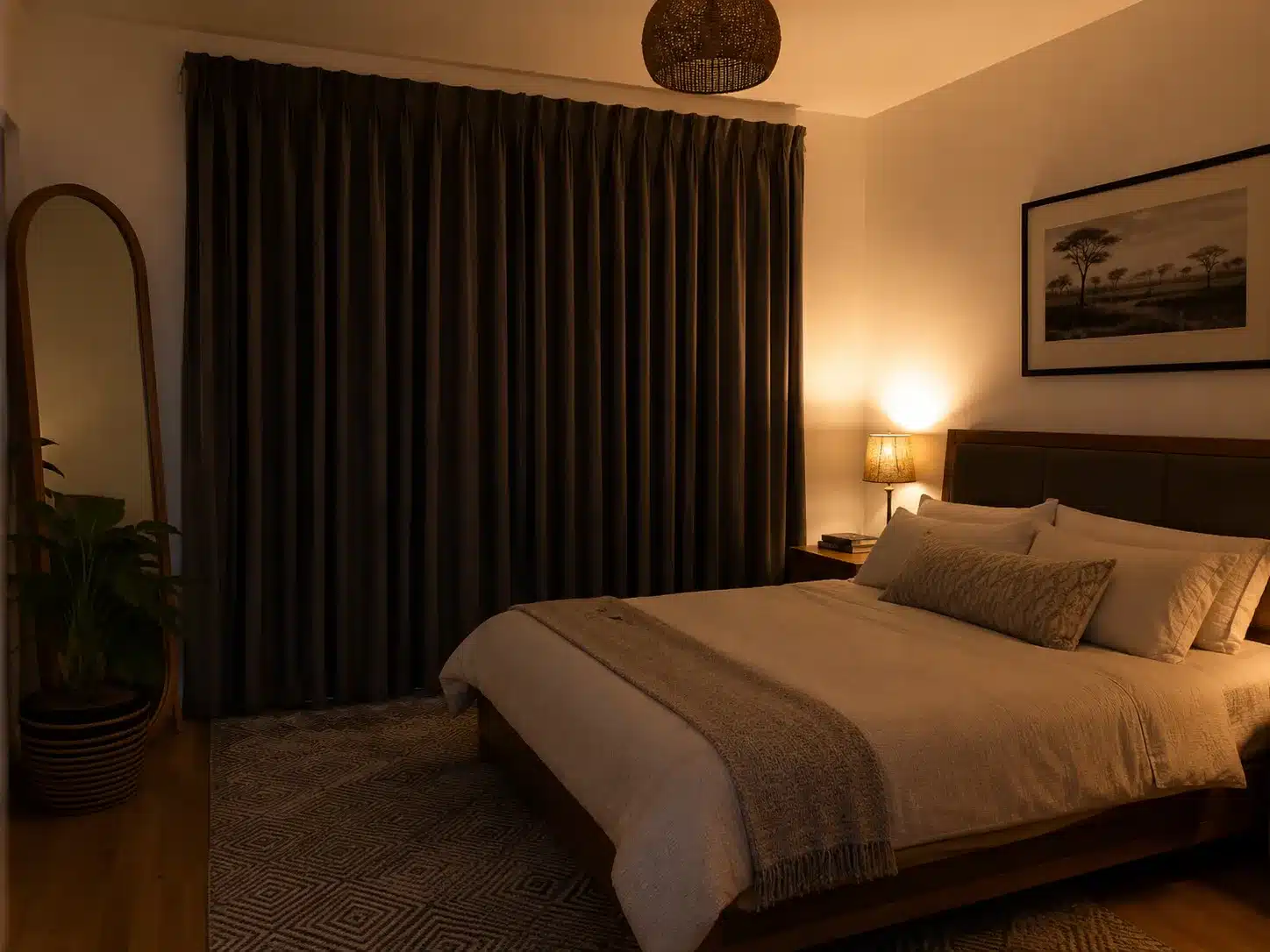
Wave Curtains
Regular folds create a clean contemporary appearance and require a compatible track.

Pinch-Pleat Curtains
Structured pleats create a tailored finish using suitable hooks, rings or tracks.

Eyelet Curtains
Metal eyelets slide directly over a visible decorative rod and form broad folds.

Layered Sheers
A sheer behind the main curtain provides flexible daylight and privacy throughout the day.

Choose for the Room, Not Only the Photograph
Curtain design should respond to daylight, privacy, cleaning, furniture position, opening direction and how often the treatment moves. Fabric samples should be viewed in the room because screen colours and artificial light can change their appearance.
Measurements, fabric or material, heading, hardware and installation should be confirmed together before the order is finalised.
Discuss Your WindowsCompare Headings Before Choosing Fabric
The heading controls how the curtain folds, how much fullness it needs, which hardware will carry it and how much space it occupies when open. Choose the system first enough that the fabric quantity and installation can be planned around it.
| Heading | Hardware | Typical character | Planning notes |
|---|---|---|---|
| Wave | Compatible wave track and gliders | Regular, contemporary folds | Needs controlled glider spacing and adequate stack-back. The track is part of the heading system. |
| Pinch pleat | Rings, rod or track with hooks | Tailored and structured | Pleats are sewn in, so finished width must be confirmed before fabrication. |
| Pencil pleat | Track or rod with rings | Flexible gathered finish | Heading tape can be adjusted, but gathering and hook placement must remain even. |
| Eyelet | Visible decorative rod | Broad, casual folds | Rod diameter must suit the eyelets. The curtain cannot pass a centre support. |
| Sheer layer | Usually the rear channel of a double track | Soft daylight and daytime screening | Plan transparency, fullness and front-to-back clearance with the main curtain. |
Match the fabric to the heading
Soft, fluid fabrics form relaxed folds, while heavier or stiffer cloth creates stronger architectural lines. Large prints need enough uninterrupted surface to read clearly. Very bulky fabric can make tightly spaced waves or small pleats feel crowded. Lining adds body and weight, so the sample should be assessed in the proposed construction rather than as an unlined swatch.
Plan drop and proportion
Ceiling-height curtains can make a room feel taller and create a cleaner line, but they need an accurate track position and finished drop. Sill-length and below-sill designs can suit some kitchens or work areas when full-length fabric would interfere with furniture or moisture. For moving curtains, a small practical floor clearance is easier to maintain than an uncontrolled puddle.
Design by room
- Living room: balance glare, privacy and how the curtain frames furniture and views.
- Bedroom: plan lining, centre overlap and side coverage as well as colour.
- Kitchen: keep fabric and controls clear of heat, water and work surfaces.
- Office: assess screen glare, repeated windows, ease of operation and maintenance.
Use colour in the actual light
Warm daylight, cool shaded light and artificial lighting can shift undertones. A neutral fabric may appear beige in one room and grey in another. View a sufficiently large sample beside the wall, floor and upholstery at more than one time of day. When matching is unnecessary, coordinate through undertone, texture or contrast instead of trying to copy one exact colour.
How to Use This Guide Before You Order
Use the examples as a planning framework, then confirm the final dimensions, material and hardware for the actual opening. Small differences in width, drop, heading or fabric construction can change the required quantity and finished appearance.
Finished Size and Coverage
We measure the intended treatment position, not only the glass. Width, drop, overlap, stack-back space, floor clearance and nearby handles or furniture all affect the finished size.
Compare headings
Curtain design should respond to daylight, privacy, cleaning, furniture position, opening direction and how often the treatment moves. Fabric samples should be viewed in the room because screen colours and artificial light can change their appearance. The selection is checked against daylight, privacy, cleaning and how often the treatment will be opened.
Material, Heading and Hardware
Fabric weight, lining, fullness and heading must work with the rod or track. Confirming them together helps the treatment hang evenly, move freely and remain supported across the full span.
Clear Scope and Quotation
The quotation should identify the selected curtain and sheer fabrics, quantities, headings and any lining. Fabric, stitching and installation are included in the stated curtain and sheer ranges. Rods and tracks are quoted separately; any other agreed items should be clearly identified before approval.
Plan the Details That Change the Result
A strong choice should work when it is open, closed and used every day—not only when viewed as a fabric sample.
Start With the Main Requirement
Decide whether compare headings, plan layered fabrics or match rods and tracks matters most. Naming the priority first prevents a decorative choice from creating a practical problem later.
Check the Treatment in Both Positions
Consider the window when the treatment is closed and where the fabric, panels or blind will sit when open. Stack-back, projections, centre joins and side coverage affect views, daylight and access to handles.
Plan for Daily Operation
Think about who will use the treatment, how often it moves and how it will be cleaned. High or wide openings, heavy lined curtains and busy work areas may need different controls or hardware from a lightly used room.
Review the Complete Window Schedule
List every opening separately, even when several windows look similar. Record the location, finished width, drop, treatment type, material or fabric, colour, heading, lining, rod or track and installation notes. Repeated sizes can then be grouped, while unusual corners, doors or high windows remain visible in the scope.
Review samples in the room where possible because daylight, wall colour and artificial light can change how a material appears. Confirm which party supplies each item, whether old hardware must be removed, what surface preparation is included and how the finished treatment will be checked at handover. The approved schedule should agree with the quotation before fabrication begins.
Measured, Planned and Fitted
A clear process from the first enquiry to the finished installation.
Define the Room Need
Identify privacy, daylight, glare, darkness and cleaning requirements.
Choose the Heading
Select wave, pleat, eyelet or another compatible construction.
Set Fullness and Drop
Decide the fold depth, finished length and stacking space.
Coordinate Fabric and Hardware
Match fabric weight, lining, rod or track and the room’s existing finishes.
Choose a design that works with the room, window and hardware.
Send your location, room type, approximate window dimensions and photos on WhatsApp.
Details That Support a Better Finish
Design With Measurements
The visual style is developed around the actual opening and wall.
Samples in Context
Colour and texture are best judged in the room’s natural and artificial light.
Hardware Included in the Decision
The heading and curtain weight determine suitable rods, tracks and runners.
Site Details Matter
For Nairobi projects, a site visit can confirm dimensions, fixing surfaces, access and installation conditions. Projects elsewhere in Kenya can be discussed according to location and scope. Share the town or neighbourhood, number of windows, room type, approximate measurements and clear photos when requesting a quotation.
Photos help identify likely options, but final production dimensions should come from the agreed measurement method. Where access, ceiling height, removal of existing hardware or surface preparation affects fitting, those items should appear in the scope before work starts.

Frequently Asked Questions
How much do curtains and sheers cost?
Curtains cost KSh 1,800–2,500 per metre depending on fabric, including fabric, stitching and installation. Sheers cost KSh 1,100–1,800 per metre, also including fabric, stitching and installation, and are quoted separately from the main curtains. Rods and tracks are also quoted separately. Your total depends on the selected fabric and the quantity required for your windows.
Which curtain heading looks most modern?
Wave headings are often chosen for a clean, regular appearance, but the best option depends on the room and hardware.
Can eyelet curtains use a track?
Eyelets normally slide directly over a rod. Track systems use compatible hooks or runners instead.
Should curtain colour match the sofa?
It can coordinate without being identical. Consider walls, flooring, upholstery, daylight and the amount of fabric visible.
Are ceiling-height curtains suitable for every room?
They can emphasise height, but the ceiling, track position, drop and stacking space must be measured carefully.
Where can I see fabric options?
Contact Samar Interiors to discuss the room and arrange to compare suitable fabric and finish options.
Related Curtain Services and Guides
Curtains in Nairobi
Main made-to-measure curtain service.
Sheers and Curtains
Layer fabrics for privacy and daylight.
Rods, Rails and Tracks
Choose compatible curtain hardware.
Ready to Plan Your Windows?
Ask for measurement, material guidance and an itemised quotation.